
How our food choices affect animals
Factory farming and its wider impact
Modern factory farming has reshaped how land, resources, and living beings are distributed on the planet. Livestock production now uses most of the world’s agricultural land, yet provides only a small share of global calories. Large areas of forest are cleared to grow feed crops, accelerating deforestation and biodiversity loss.
This shift has also altered the balance of animal life on Earth. Farmed animals make up the vast majority of mammal biomass, while wild animals represent only a small fraction. Such imbalance reflects food systems designed for scale and efficiency, leaving less space for wildlife, ecological balance, and resilient ecosystems.
Animals as sentient beings
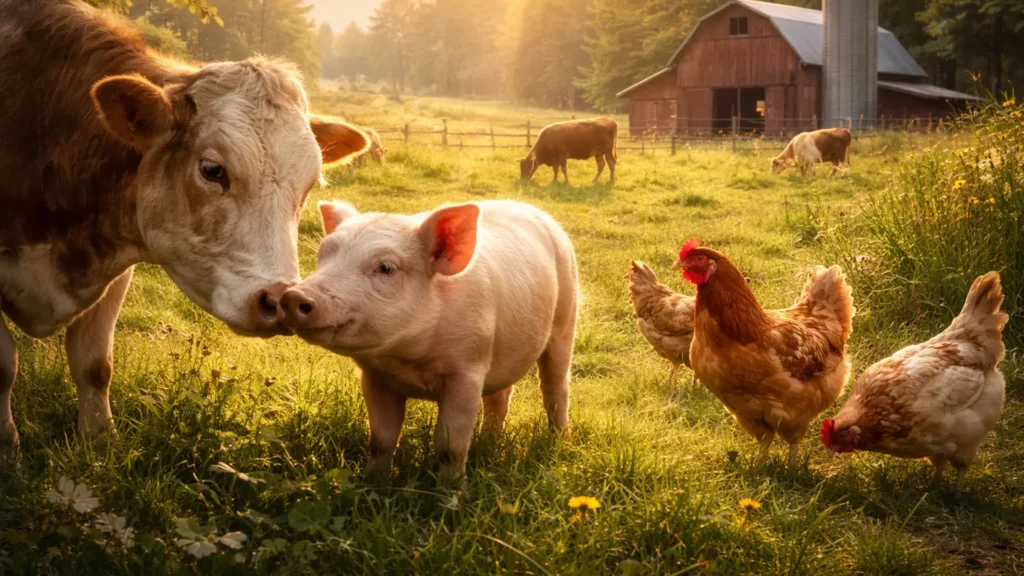
Animals are not objects or resources. They are living beings capable of feeling pain and comfort, fear and safety, connection and loss. They form bonds, respond to care, and experience the world in ways that matter to them.
When food systems treat animals solely as units of production, this reality fades from view. The ethical question is not only how animals are used, but how they are seen. Recognizing animals as sentient beings opens the possibility for a different relationship, one grounded in responsibility, care, and respect rather than control.
This perspective does not demand perfection. It invites awareness. How we relate to animals reflects not only our food choices, but our values and our sense of shared life on this planet.
What factory farming takes away
In industrial farming systems, animals are often kept in confined environments designed for efficiency rather than well-being. Limited movement, lack of natural light, and the inability to express natural behaviors shape daily life for many farmed animals.
To sustain these conditions, antibiotics are widely used. This practice extends beyond farms, contributing to antibiotic-resistant bacteria that threaten human health and weaken one of modern medicine’s most vital tools.
Beyond physical consequences, something less visible is lost. When living beings are reduced to production units, dignity erodes, not only for animals, but for people as well. Participation in such systems distances us from empathy and responsibility, shaping food systems that affect bodies, environments, and values alike.
How food choices can lead to positive change
Every food choice sends a signal. What we eat influences how animals are raised and how food systems respond to demand. Even small shifts in consumption can reduce pressure on animals and challenge systems built on confinement and overproduction.
Choosing more plant-based foods, reducing reliance on factory-farmed products, or supporting higher welfare practices can help move food systems in a different direction. These choices do not need to be perfect to matter. Each step contributes to less suffering and greater respect for animal life.
Awareness changes perspective. When food choices are made with animals in mind, they become more than habits. They become expressions of care, responsibility, and a more conscious relationship with the living world we share.
Read more from Floretika

Chronic Disease of Planet Earth – Part 3
In the third part, explore why the recommendation for an exclusively “local” diet is an ecological myth, how commercial fishing turns our oceans into microplastic factories, and why artificial fish farming poses a new threat to both the planet and human health.
Chronic Disease of Planet Earth – Part 2
In the second part, find out how modern agriculture turns fertile soil into lifeless dust, and why the idea that we can continue with mass meat consumption simply because it carries a “green” label is a pure illusion.
Chronic Disease of Planet Earth – Part 1
Discover how animal agriculture, resource overuse, water pollution, and deforestation are driving the planet toward inevitable environmental collapse.
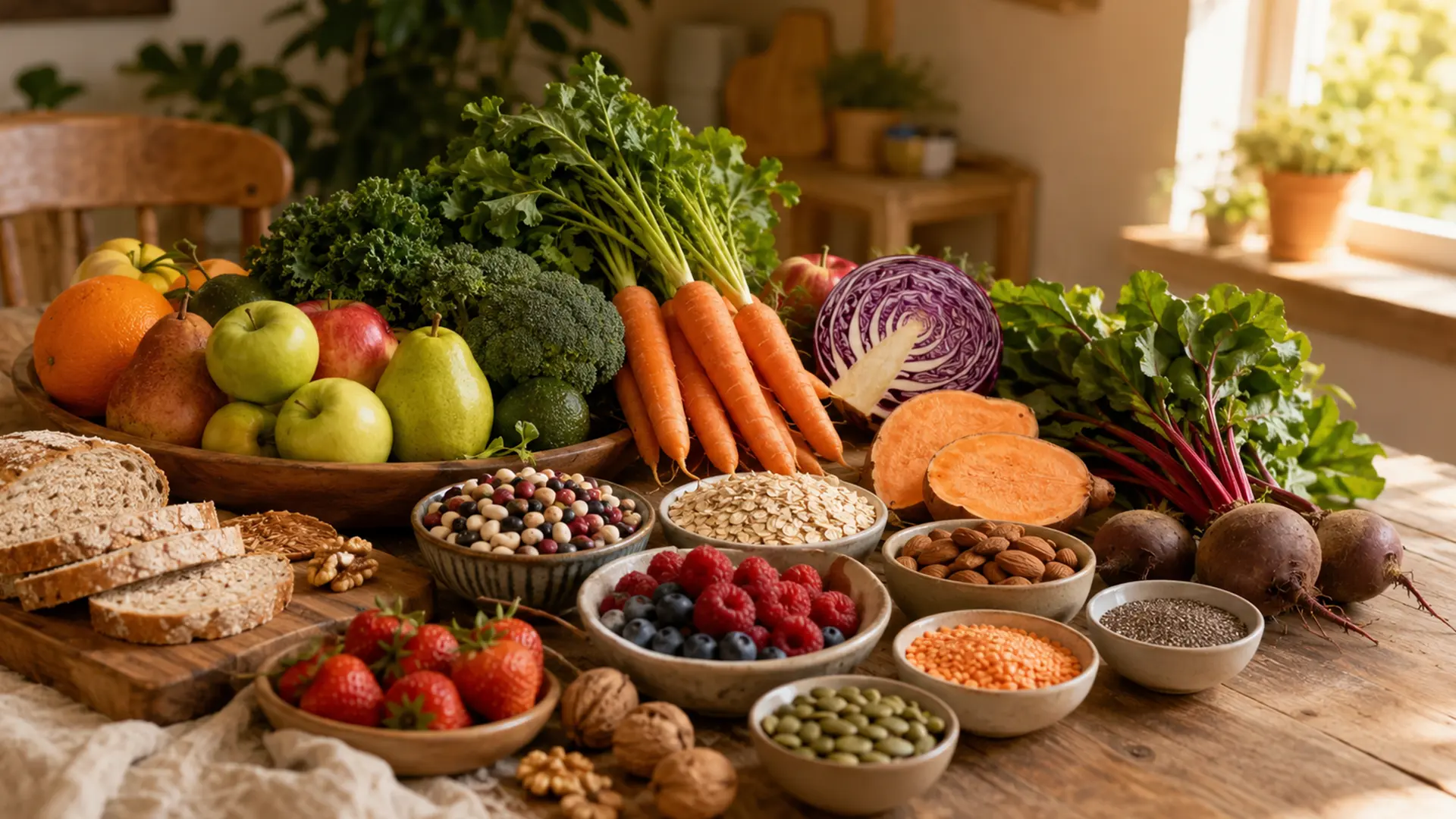
Fiber – A Unique Gift of Plant Based Food
Discover why fiber-rich whole plant foods support gut health, satiety, heart health, brain function, and long-term well-being.
The real price of food we don’t see
Food is more than what we pay at the store. Its true cost unfolds through health, environment, and the systems that quietly support everyday life.
Food as a daily choice, not a diet
Food is not a short-term solution or a set of rules to follow. It is a daily choice that shapes our habits, emotions, health, and the world around us.
Stay connected
Occasionally, I share reflections, new guides, and insights around food, health, and conscious choices. If you’d like to receive these updates, you can join the newsletter.
No pressure. No noise. Just thoughtful content, sent with care.