

Ethical food systems
What makes a food system ethical

Ethical food systems are not about perfect choices or strict rules.
They are shaped by the relationships within the system, between people, nature, and the future we are creating.
People
Ethical food systems consider the people behind food.
Farmers, workers, and communities are not hidden costs, but essential parts of the system. Fair conditions and dignity matter as much as efficiency.
Nature
Long-term impact
An ethical food system is built upon justice and responsibility toward the shared home of all living creatures.
Beyond price and efficiency
Unseen costs
Low prices rarely reflect the full cost of food.
They often transfer pressure from the market to nature and people.
Ethical food systems question efficiency when it ignores long-term consequences.
People behind food
Food does not appear on shelves by itself.
It is shaped by the work of farmers, laborers, small producers and specialists from diverse fields.
An ethical food system recognizes their role beyond output and efficiency.
Fair conditions, stability, and dignity are not extras, but foundations.
When people are treated as replaceable parts of a system, the system becomes fragile.
When they are supported, the entire food chain becomes more resilient.

Human hands in living systems
The role of transparency and trust
Transparency helps people make choices without pressure or confusion.
Knowing where food comes from, how it is produced, and when it is in season builds trust between those who grow food and those who eat it.
Clear labels, honest communication, and visible origins reduce the distance between producers and consumers.
Trust grows when food systems are understandable, not hidden behind complex claims or marketing messages.
When trust is present, choices become simpler and more grounded.
Ethics as a direction, not a rulebook
A flexible approach
Ethics in food is not about strict rules or perfect behavior.
It is about direction, awareness, and the intention to move toward systems that cause less harm and create more balance over time.
An ethical food system allows space for learning, context, and gradual change.
It recognizes that people live in different circumstances, and that responsibilty grows through understanding, not pressure.
Ethics offers us guidance and serves as a steady compass.
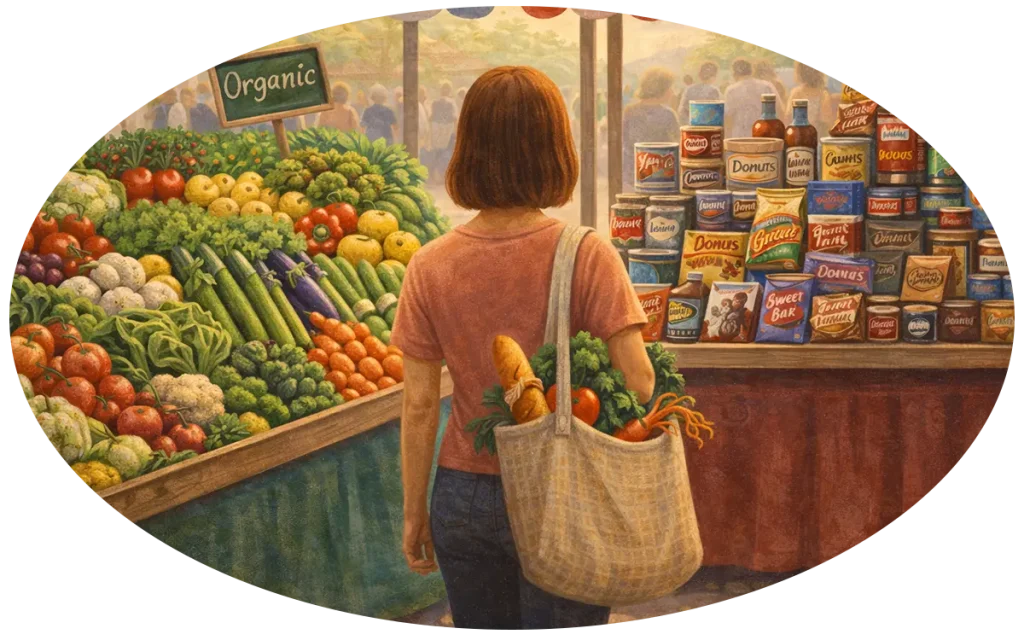
Ethics lives in everyday decisions
What long-term studies reveal
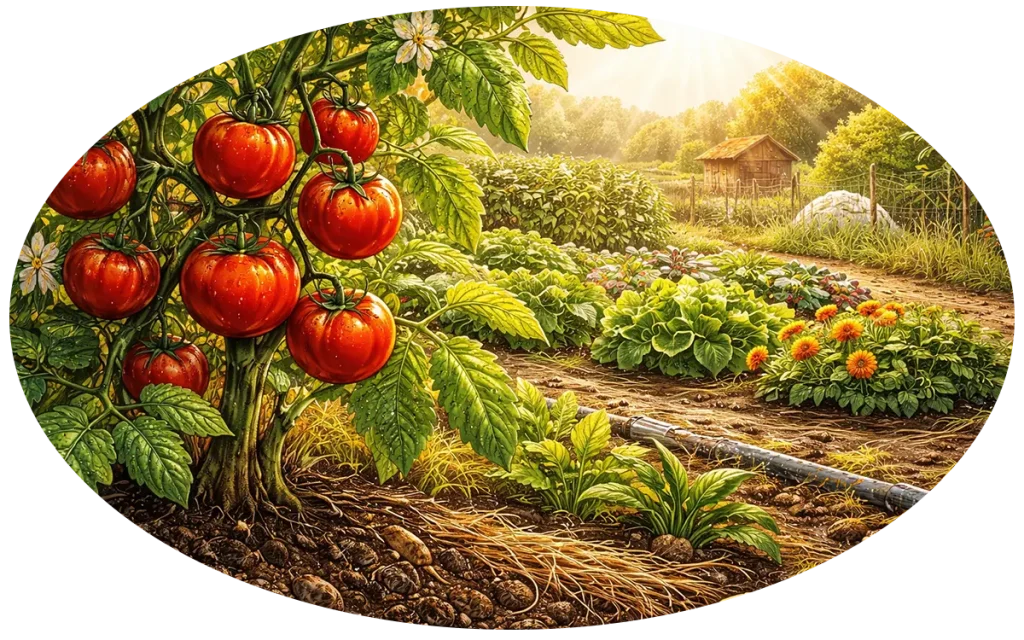
Discussions about food systems often rely on assumptions and short-term results.
Long-term studies offer a clearer picture of how different farming practices perform over time.
Based on decades-long field trials comparing conventional and organic farming systems, research from the Rodale Institute shows:
Comparable yields
Stronger in droughts
Healthier soil & microbial life
Better water retention
Rodale Institute – Farming Systems Trial
https://rodaleinstitute.org/science/farming-systems-trial/
Long-term outcomes matter more than short-term efficiency.
Subsidies shape what we eat
Food systems are not shaped by markets alone.
Public policies and subsidies play a major role in determining what is produced, promoted, and made affordable.
- 87% of global agricultural subsidies support cheap, resource-intensive food
- Without subsidies, prices of meat and ultra-processed products would be significantly higher
- Policy choices influence production methods, food availability, and population health outcomes
What we eat is shaped as much by policy decisions as by personal choice.
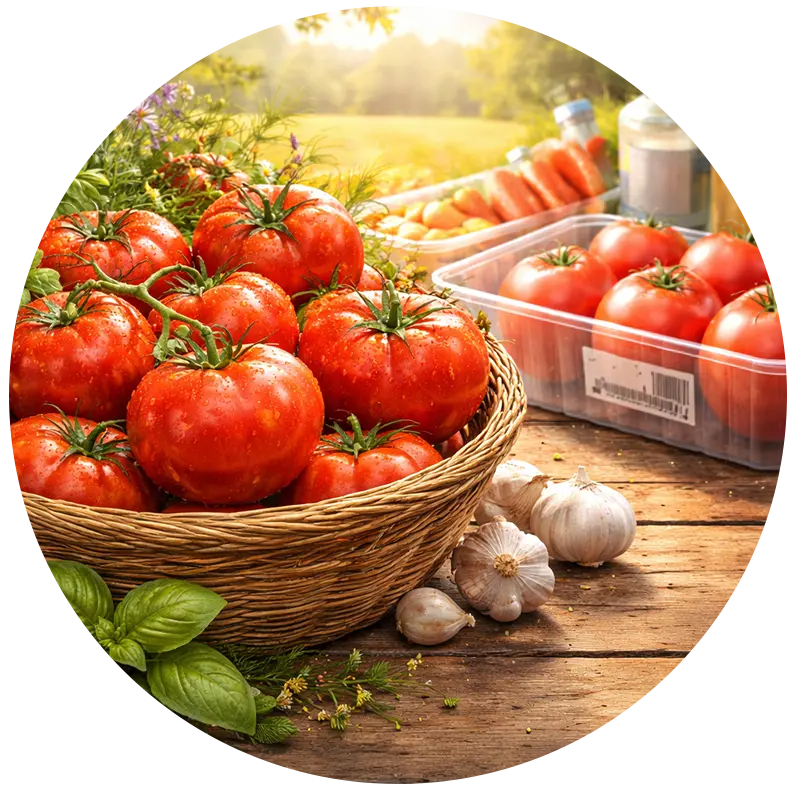
Availability does not equal quality.
Where change begins
System level
- Policy shifts toward regenerative and organic agriculture
- Support for small and medium producers
- Long-term investment in soil, water, and ecosystem health
Individual level
- Awareness over restriction
- Fewer animal products
- Nutrient-dense food over calorie-dense food
Every choice matters.
How ethical food systems connect to everyday choices
Looking beyond food