

Emotions & eating habits
How emotions and empty calories shape our relationship with food and create unhealthy habits
The formation of habits
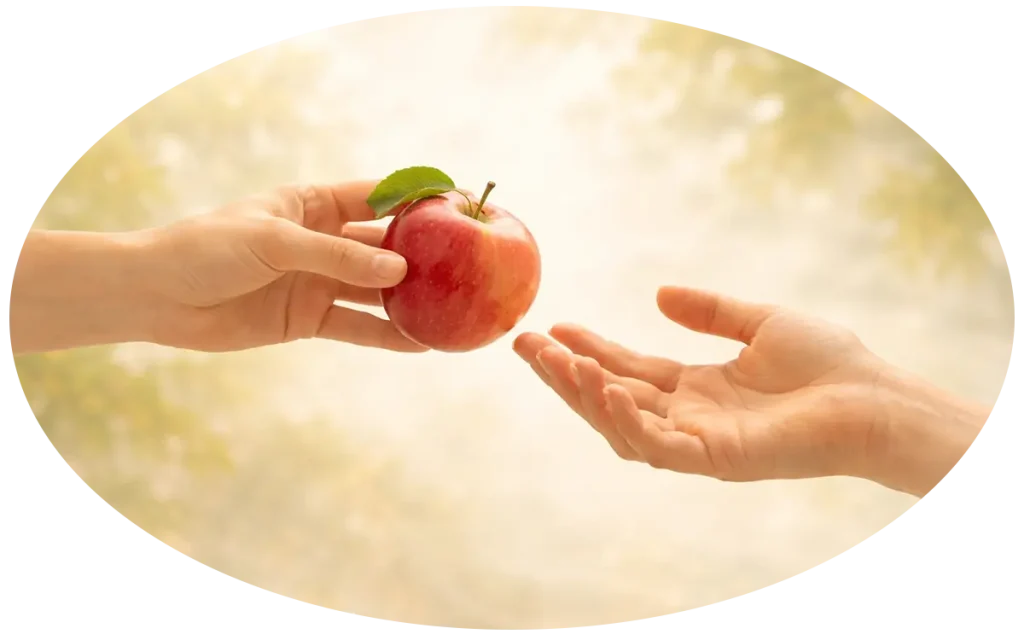
Our relationship with food is shaped by much more than nutritional knowledge or conscious choice.
It is strongly influenced by emotions and the degree of food processing, forming patterns we are often not even aware of.
Brain
Our brain is subconsciously programmed to reward every success and food discovery with a sense of pleasure to ensure our survival as a species.
Since the cerebral cortex consumes as much as a quarter of our total calories for problem-solving, learning new activities, planning, and thinking, the brain constantly and ruthlessly seeks ways to save energy.
That is why it turns repetitive conscious activities into habits or impulsive actions, and uses only the internal basal ganglia to execute them, which consume the least amount of energy.
Refined foods
Modern, ultra-processed food is full of refined sugar and unhealthy fats, and stripped of the natural dietary fiber that slows down digestion.
Due to this composition, various snacks, sweets, baked goods, and similar items become addictive, as they instantly give the body a false and temporary sense of relaxation and happiness.
Just a few repeated situations of seeking comfort in sugar are enough to create a stable and deeply ingrained habit that harms health in the long run.
Emotions
When we are overwhelmed by heavy emotions such as fear, sadness, or anger, our energy goes toward them, and we lose the capacity for rational thinking.
In those moments, we are unable to consciously plan solutions; instead, driven by emotions, we look for the fastest way to relieve the discomfort.
Due to the need to escape unpleasant emotions, we automatically reach for food that provides an instant sense of comfort and pleasure.
Habits
We formed most of our unhealthy habits back in our youth, not based on a strategy, but out of temporary fears and insecurities.
However, habits are crucial for efficient functioning, and they change gradually, by finding a deeper purpose and through conscious, rather than impulsive, planning of activities such as whole food grocery shopping, meal preparation, and stocking up.
When we connect habit change to personal meaning and know exactly both how and why we are doing it, the old habit stops being a struggle and successfully transforms into a beneficial, creative, and lasting choice of activities.
Eating beyond hunger
Sometimes we reach for food even when the body is not asking for nourishment.
This is not a failure, but a signal worth listening to.
Once we notice this, the goal is to observe our own habits with pure curiosity and self-compassion.
Stress, control, and food

Stress often creates a need for control.
When life feels unpredictable or overwhelming, the body looks for something it can manage.
Control
Regulation
The cycle
Understanding this cycle is not an attempt to forcibly ‘tame’ our habits. It is a path toward recognizing what we are trying to regulate within ourselves—whether it’s a masked need for peace, comfort, rest, or something else entirely.
Only when we stop forcing a ‘fix’, we find the strength to change; that’s when the vicious cycle begins to lose its grip.
Understanding the response
Finding a deeper purpose

Intrinsic motivation
Before changing habits, we learn to notice them.
We direct our attention to the signals our body sends us, to our thoughts, and to our emotions immediately before, during, and after performing an ingrained habit.
We listen without judgment, pressure, or urgency to see immediate results or fix the problem overnight. Gentleness creates space for real understanding.
In a pleasant environment or total silence, we turn to our heart and ask ourselves a few questions. Which activities bring us peace, give us meaning, and provide energetic potential? What truly drives us and what matters most to us in life? Then we ask ourselves – Why is this important to us?
The ‘Why’ gives us the opportunity to become aware of whether something is imposed from the outside or comes from our heart.
Change starts right here – with presence, curiosity, and respect for your own rhythm.
A gentler relationship with food
This work is not about achieving perfect eating.
It is not a plan to follow.
It is not a set of rules to maintain.
It is not about control or restriction.
It is about relationship.
A relationship built on awareness and trust in your body and life.
Explore related topics: