Modern food industry illustration

Modern food industry

What we eat, what we pay, and what it really costs

The hidden cost of food

Beyond the price tag

Modern food often looks affordable at the checkout.
Yet the real cost does not end there.

The price we see does not include the long-term damage to human health, the environment, and society. These hidden costs are paid later, through rising healthcare expenses, environmental degradation, and reduced quality of life.

According to the United Nations Food and Agriculture Organization (FAO), the global hidden costs of the agrifood system reached $12.7 trillion per year, around $5 per person per day worldwide.

Understanding these hidden costs is the first step toward change.

Not to blame or judge, but to make informed choices that support long-term health, for people and the planet.

When cheap food becomes expensive for our health

Beyond feeling fine
The health impact of modern food is often invisible at first. Its consequences appear gradually, shaping how we feel, function, and live over time.

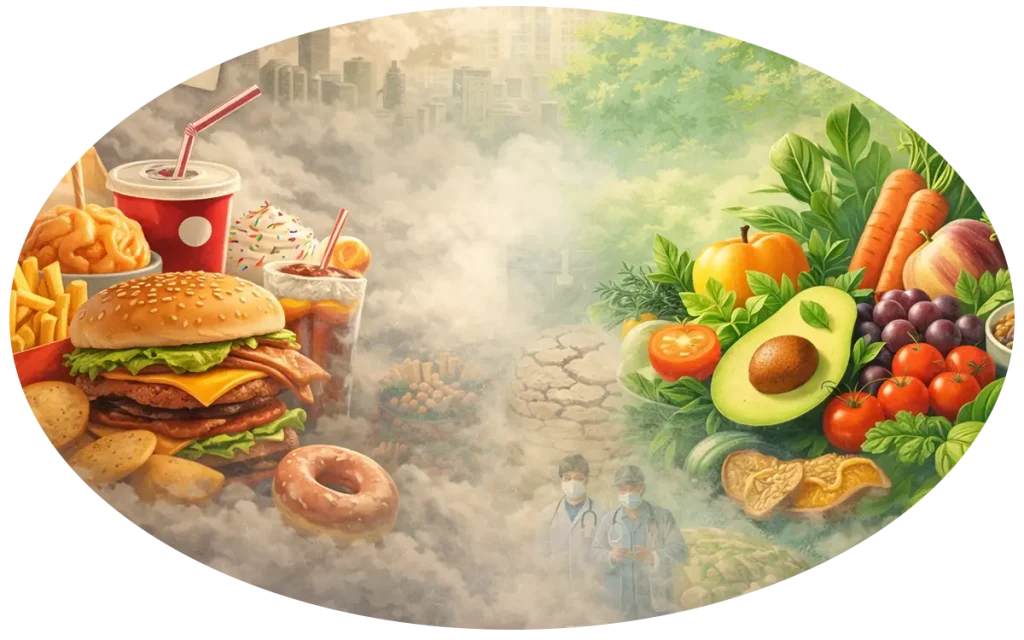
Ultra-processed diets

Ultra-processed foods have become a dominant part of modern diets

Diet and long-term burden

High consumption of red meat and refined products is linked to long-term health burden

Societal health impact

Reduced working capacity and rising healthcare costs affect society as a whole

Rethinking health

Feeling “fine” is not the same as being healthy
Health is not only the absence of symptoms, but the capacity to live with energy, resilience, and balance.

Food production and the environment

Beyond the plate

Food does not affect only human health.
The way it is produced shapes ecosystems, water cycles, climate patterns, and the stability of life on Earth.
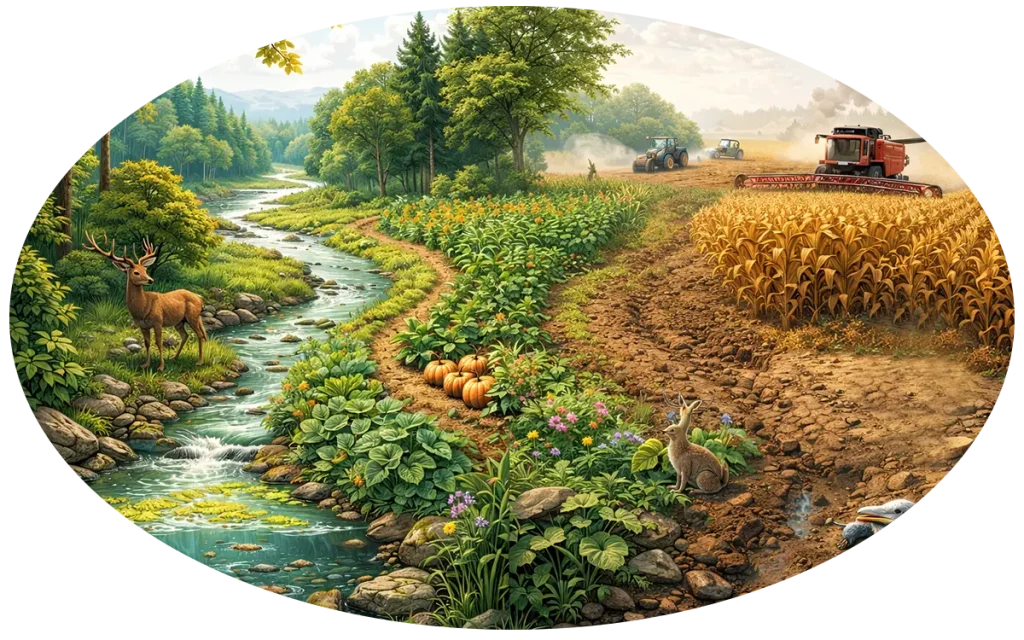
Food production and the environment

Two ways of using the same land.

Nitrogen runoff and water pollution

Excess nitrogen from fertilizers and waste is washed into rivers, lakes, and oceans. This process fuels algae blooms, reduces oxygen levels in water, and leads to fish deaths and ecosystem imbalance.

Loss of biodiversity and fish populations

Pollution, habitat destruction, and intensive farming practices reduce species diversity. Aquatic and terrestrial ecosystems lose resilience as fewer species remain to support natural balance.

Deforestation and greenhouse gas emissions

Large areas of forest are cleared to make room for livestock and monoculture crops. At the same time, food production contributes significantly to greenhouse gas emissions, accelerating climate change.

Soil degradation and groundwater depletion

Intensive farming depletes the fertile topsoil faster than it can regenerate. As droughts increase, reliance on groundwater grows, draining reserves that take centuries to replenish.
Food systems are deeply connected to climate, water, soil, and life itself.

Future food prices will reflect the stability of the systems in which it is produced.

Animals within modern food systems

All Those Innocent Beings

Modern food systems do not only shape land, water, and climate. They also define how animals live, are treated, and understood within food production.

Industrial scale, efficiency, and cost reduction systematically hide from consumers the harsh and heavy reality in which these beings live.

Climate, water, and future food prices

Looking ahead

Food prices are shaped by forces far beyond markets and supply chains.
Climate patterns, water availability, and natural resource limits play an increasing role.

  • Rising temperatures and unstable weather reduce crop resilience
  • Multi-year droughts increase reliance on groundwater
  • Depleted natural resources lead to higher long-term food prices
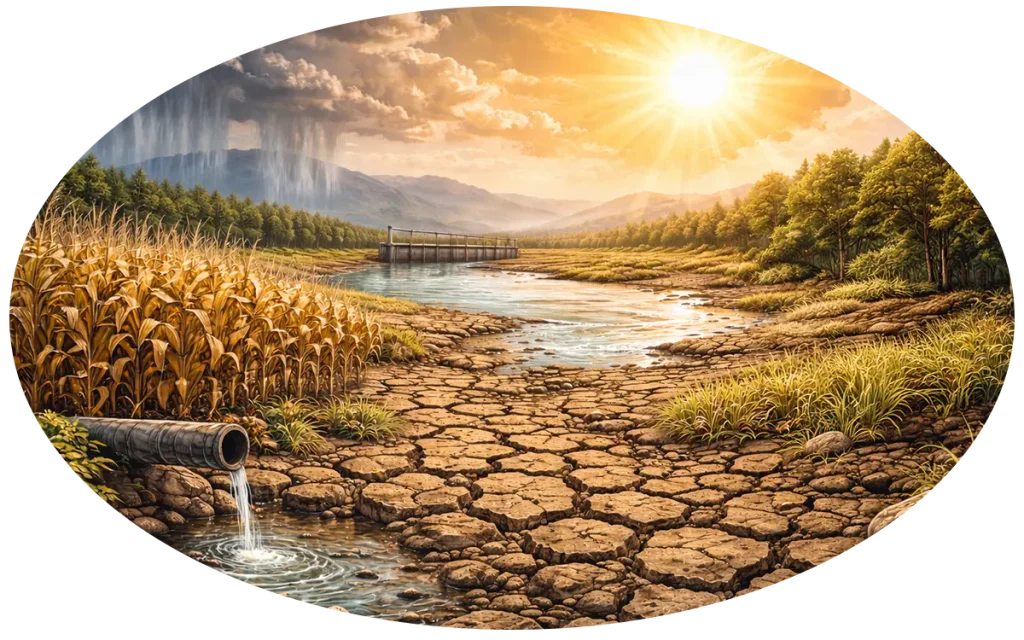
Where climate and water shape food systems

Food prices reflect the condition of soil, water, and climate.

Future food costs are shaped by the condition of the systems that produce it.

Why organic food seems expensive

Understanding the difference
At first glance, organic food often appears more expensive than conventional options. This difference is shaped by how food is produced, supported, and priced within the current system.

More labor-intensive production

Organic farming relies more on human labor and ecological processes than on synthetic inputs and automation.

Lower supply compared to demand

Demand for organic food has grown rapidly, while supply remains limited.

Costly certification processes

Organic certification requires time, documentation, and financial investment, especially for small producers.

Lack of subsidies

Unlike conventional agriculture, organic and regenerative systems receive little or no financial support.
When environmental and health costs are included, organic and regenerative farming becomes the more rational long-term choice.

What long-term studies reveal

Evidence over assumptions
From living soil to real flavor

Discussions about food systems often rely on assumptions and short-term results.
Long-term studies offer a clearer picture of how different farming practices perform over time.

Based on decades-long field trials comparing conventional and organic farming systems, research from the Rodale Institute shows:

Comparable yields

Organic systems achieved yields comparable to conventional methods, without synthetic fertilizers or pesticides.

Stronger in droughts

In extreme weather conditions, organic fields produced up to 30% higher yields.

Healthier soil & microbial life

Organic practices increased topsoil depth, microbial biomass, diversity, and biological activity.

Better water retention

Healthier soils absorbed and retained water more effectively, without the accumulation of toxic substances.

Rodale Institute – Farming Systems Trial
https://rodaleinstitute.org/science/farming-systems-trial/

Long-term outcomes matter more than short-term efficiency.

Subsidies shape what we eat

Behind the prices

Food systems are not shaped by markets alone.
Public policies and subsidies play a major role in determining what is produced, promoted, and made affordable.

  • 87% of global agricultural subsidies support cheap, resource-intensive food
  • Without subsidies, prices of meat and ultra-processed products would be significantly higher
  • Policy choices influence production methods, food availability, and population health outcomes

What we eat is shaped as much by policy decisions as by personal choice.
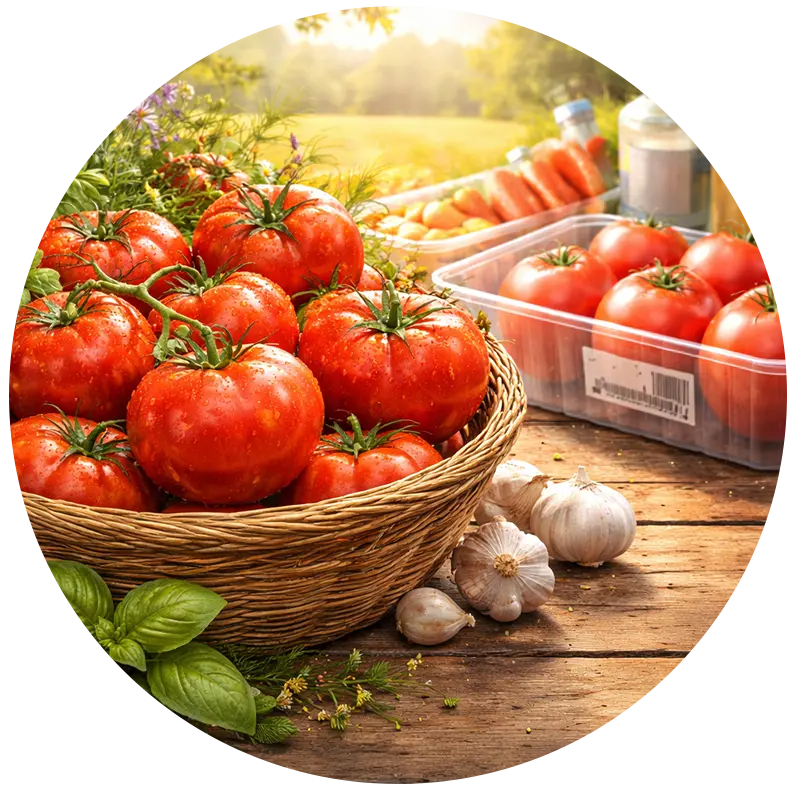
Organic vs industry food

Availability does not equal quality.

Where change begins

Lasting change happens at multiple levels, through systems we shape together and choices we make every day.

System level

  • Policy shifts toward regenerative and organic agriculture
  • Support for small and medium producers
  • Long-term investment in soil, water, and ecosystem health

Individual level

  • Awareness over restriction
  • Fewer animal products
  • Nutrient-dense food over calorie-dense food
Moving forward

Every choice matters.

Why this matters here

Understanding this system is a call toward wholeness.
 
It is a call to live in gratitude, compassion, and love for every living being and for all that is created.
 
In our noble pursuit of light lie the foundations of true, sustainable change.

The journey begins with insight

Continue exploring

If this page made you pause, reflect, or question what you’ve been told about food, it has already done its job. You are welcome to explore, learn, and take the next step in your own time.
Explore related topics: